You are about to move tokens from an Ethereum-based wallet to an asset on another network. The quote looks favorable, but the route crosses contracts you have not used before, and the transaction asks for approval as well as a swap. A wallet simulation may show what the transaction is expected to do before you sign. That is useful—but it is not a guarantee that the transaction will succeed or remain safe. To evaluate Rabby Wallet’s role in cross-chain swaps, it helps to separate three things often blurred together: wallet inspection, transaction execution, and the bridge or service coordinating the transfer.
Rabby is an EVM-focused wallet, and its recent messaging presents the browser extension as a way to use Ethereum and other EVM chains. For DeFi users, the important question is not whether a wallet makes on-chain activity “secure” in the abstract. It is which risks a wallet can help you see, which risks remain with the underlying protocol and route, and how to interpret a simulation without treating it as a promise.
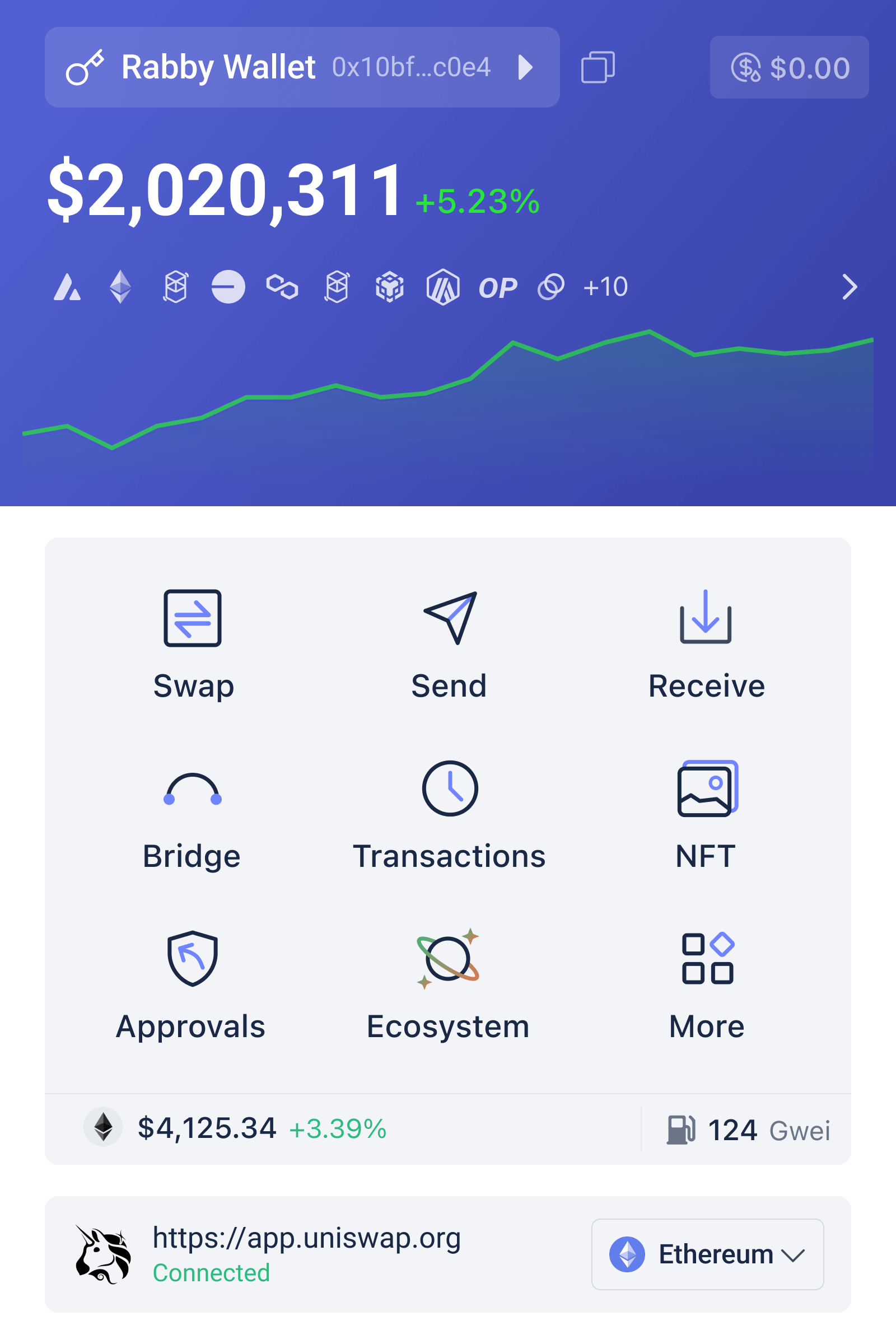
Tabla de contenidos
Myth: A simulation proves a transaction is safe
Transaction simulation is best understood as a preview based on the transaction’s current inputs and the blockchain state available to the simulation system. In simplified terms, it estimates how a transaction would behave if executed under those conditions: which assets might leave the wallet, what the wallet might receive, and whether a contract call appears likely to revert. This can make opaque contract interactions easier to inspect than a raw block of calldata—technical instructions that tell a smart contract what to do.
But a preview is not a security audit. It cannot establish that a contract has no hidden weakness, that a token is legitimate, or that a transaction will behave identically when it is eventually included on-chain. The state may change before execution; a pool’s price or available liquidity can move, and a contract may depend on conditions that differ by the time the transaction is processed. A simulation can also be incomplete or difficult to interpret. Treat it as a risk signal, not a certificate.
The practical value is still substantial. A simulation that shows an unexpected token transfer, an unfamiliar approval, or a result inconsistent with the intended action gives you a reason to stop and investigate. The key is comparing the preview with your intent. “The wallet displayed a result” is not the same as “I understand and accept every effect.”
Cross-chain swaps are coordinated workflows, not one magic trade
A swap within one network usually changes one asset for another through a decentralized exchange or another smart contract. A cross-chain swap adds a second environment. The route may involve a source-chain transaction, a bridge or cross-chain messaging mechanism, and a destination-chain action. Those steps can be handled by a route provider, a bridge, liquidity networks, or a combination of services; the exact mechanics depend on the route selected.
This distinction matters because a wallet interface can help present and authorize a workflow without controlling every part of it. Rabby can serve as the wallet through which a user reviews and signs supported EVM transactions, but the transfer’s completion also depends on the contracts, liquidity, validators or relayers, and operational design of the services involved. If a transaction succeeds on the source chain, that alone does not prove the destination action has completed. Cross-chain settlement can take time, and failures or delays may require a separate recovery process determined by the route.
“One-click” describes the user experience, not necessarily the system architecture. A clean interface can hide meaningful dependencies. Before confirming, identify the source and destination networks, the asset you are sending, the expected asset you will receive, and any stated fees or minimums. Check whether the quote is an estimate and whether the route explains what happens if the destination step is delayed or cannot complete.
Myth: A favorable quote is the whole cost
Cross-chain quotes are not just a comparison of token prices. The effective outcome can depend on trading fees, bridge or service fees, network gas, price impact, and the amount of liquidity available along the route. Price impact is the change in an asset’s price caused by the size of a trade relative to available liquidity. A displayed estimate may also differ from the final amount if market conditions change or the transaction takes time to execute.
That makes the useful comparison broader than “Which route shows the biggest number?” Consider the amount you will receive, the assets and contracts involved, how long the route may take, and what recourse exists if something stalls. A route with a slightly less attractive estimate may be preferable if its mechanics and failure handling are clearer. Conversely, a familiar brand or wallet warning-free preview does not make a route automatically dependable.
For US users, there is an additional practical boundary: wallet software does not determine the legal or tax treatment of a transaction. Those questions can depend on a person’s circumstances and applicable rules. Keep records of swaps and transfers, and do not assume that a wallet’s transaction history provides a complete accounting of cross-chain activity.
A decision framework before you sign
Use a simple sequence: verify the action, inspect the preview, then assess the route. First, ask whether the requested operation matches what you meant to do. A token approval, for example, grants a contract permission to use tokens up to a specified amount; it is distinct from the swap itself. If an approval is broader than expected, pause and understand why before signing.
Next, read the simulation as a comparison between expected effects and intended effects. Does the asset leaving your wallet make sense? Is the recipient or destination consistent with the route? Does the result show an output you recognize? If the simulation is unavailable, ambiguous, or inconsistent, do not treat that uncertainty as a reason to proceed quickly.
Finally, evaluate what the preview cannot answer: whether the token or contract is trustworthy, whether the route’s operators and safeguards meet your standards, and what happens during a delay. For an unfamiliar route or a large amount, testing with a smaller value can limit exposure, though it cannot prove that a later transaction will behave the same way. No single check removes risk; several independent checks can make a mistaken approval or misunderstood transfer less likely.
Users considering the browser extension should obtain it through a source they have independently verified, then check the publisher and requested permissions during installation. The rabby extension download link is one way to reach the stated download page, but a link alone is not proof of authenticity. Browser extensions can interact with sensitive wallet information, so verify the domain and avoid entering a recovery phrase into a website or support form. A legitimate wallet should not need your seed phrase to simulate a transaction.
What to watch as wallet previews improve
Better simulations can make complex transactions more legible, especially as users encounter more multi-step and cross-chain routes. The meaningful measure of progress is not simply whether a preview appears. It is whether the preview communicates uncertainty, explains asset movements in plain language, and helps users distinguish a wallet-level warning from a risk that belongs to a bridge or protocol.
Even strong previews face a structural limit: they are snapshots and interpretations of systems that can change. If routes become more complex, clear disclosure of dependencies and recovery paths will matter as much as a polished confirmation screen. Users should watch for explanations of fees, destination outcomes, approval scope, and failure handling—not just speed or the number of supported networks.
Frequently asked questions
Does Rabby’s transaction simulation guarantee that a swap will succeed?
No. A simulation can help preview likely effects under the conditions checked, but on-chain state may change, a contract may behave differently at execution, and a cross-chain route may depend on separate services. Use it to identify surprises, not to guarantee an outcome.
Does a successful source-chain transaction mean the cross-chain swap is complete?
Not necessarily. The destination-chain action may still be pending or subject to the route’s settlement process. Check the route’s status and its stated handling for delays or failures rather than relying only on the source-chain confirmation.
What should I check before installing a wallet extension?
Verify that you are using the intended official source, review the extension publisher and permissions, and protect your recovery phrase. Do not share that phrase with a website or support representative; a transaction preview does not require disclosure of it.
Leave a Comment