A common misconception in DeFi is that gas optimization simply means waiting for a cheaper time to transact. Timing matters, but it is rarely the most consequential variable. A user can save a few dollars on network fees and still expose an entire token balance through an unnecessary approval, sign a transaction against the wrong contract, or accept a broad permission that remains active long after the original trade.
The more useful mental model is that every transaction has two prices: the fee paid to the network and the authority granted to software. The first is visible in a wallet confirmation. The second may be easy to overlook. For users installing a browser wallet such as Rabby to interact with Ethereum and other EVM-compatible networks, managing both prices is central to sensible risk management.
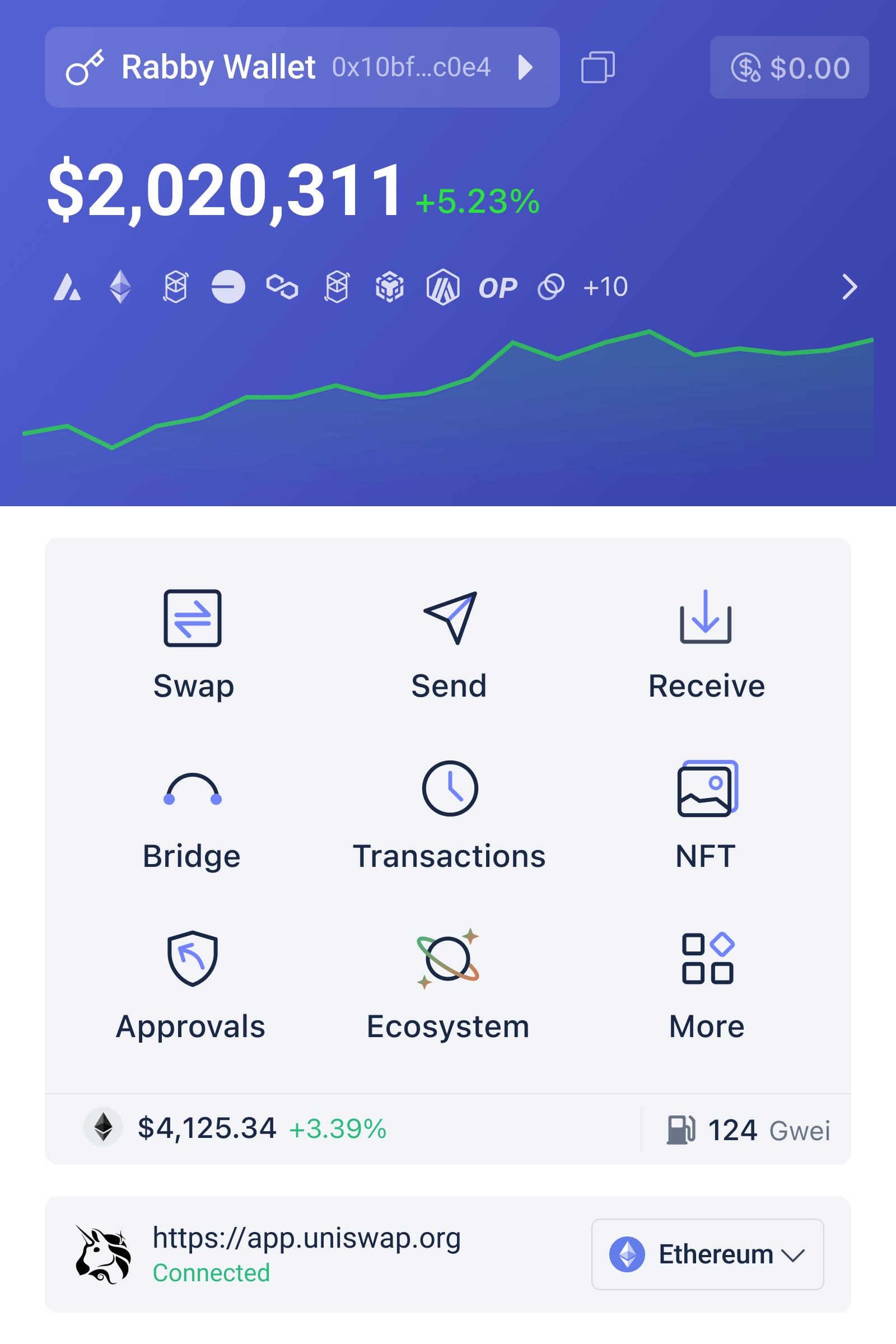
Tabla de contenidos
A Realistic DeFi Case: The Cheap Swap That Creates an Expensive Risk
Consider a US-based DeFi user who wants to swap a stablecoin for another asset. The user connects a browser extension, selects a decentralized exchange, and sees two transactions: an approval and the swap itself. Because network fees are temporarily elevated, the user lowers the gas setting or postpones the trade until activity declines. That is a reasonable attempt at optimization.
However, the approval may be more important than the gas setting. An ERC-20 approval is an on-chain instruction allowing a specified spender, usually a decentralized application contract, to transfer a specified amount of tokens from the user’s wallet. It is not the same as sending tokens immediately, but it creates delegated authority. If the spender’s contract is compromised, incorrectly designed, or malicious, an unused high allowance can become a future attack surface.
This is the first non-obvious distinction: reducing gas reduces the cost of an action, while reducing an allowance can reduce the consequences of a later action. The two controls are related, but they solve different problems. A wallet that helps users inspect transaction effects can therefore contribute more to security than a simple fee estimator, even though the benefits are less easily expressed as a dollar amount.
How Gas Optimization Actually Works
On EVM networks, transaction fees generally reflect the amount of computational work required and the price paid for each unit of that work. Users often describe this as “gas,” although the final fee depends on network conditions, transaction complexity, and the fee parameters selected. A swap involving multiple contracts, token transfers, or routing steps may consume more gas than a straightforward transfer.
There are several legitimate optimization strategies. A user can avoid unnecessary transactions, combine actions where a trusted application supports it, choose a suitable network for the intended activity, and submit during less congested periods. Some Layer 2 networks can reduce fees relative to Ethereum mainnet, but that choice introduces other considerations: bridge risk, liquidity fragmentation, differing application support, and the possibility that the asset or protocol is not available in the desired environment.
Fee urgency also deserves skepticism. A higher fee can improve the chance of timely inclusion, but it does not make a transaction safer. It cannot repair a malicious contract, reverse a mistaken approval, or guarantee a favorable execution price. Conversely, setting a fee too low can leave a transaction pending, create replacement complications, or cause the user to act hastily while trying to resolve it.
For that reason, a practical optimization sequence is to question whether the transaction is necessary, verify what it does, select an appropriate network, and only then adjust fee parameters. Optimizing the fee before validating the transaction reverses the order of importance.
Token Approvals: The Permission Layer Most Users Underestimate
Token approvals are often treated as a routine preliminary step, but they are better understood as capability grants. The allowance may be exact and short-lived in practical terms, or it may be much larger than the immediate transaction requires. A large allowance can make future interactions more convenient because the user may not need to approve again. It can also expand the potential loss if the approved spender later behaves improperly.
There is a genuine trade-off here. Exact approvals can limit exposure, but they may require more transactions. More transactions mean additional gas costs, more opportunities for signing errors, and a less convenient user experience. Unlimited approvals can reduce friction, but they rely more heavily on the continued safety of the spender and the user’s ability to monitor permissions.
No setting eliminates this trade-off. A cautious user should evaluate the application, the contract address, the token, the amount being approved, and whether the permission will remain useful after the immediate activity. Revoking an approval is itself an on-chain transaction, so it may not be economically sensible to revoke every low-value allowance immediately. Risk management is proportional, not ceremonial.
A useful rule is to treat approvals as a portfolio of permissions. Review high-value or unfamiliar allowances first, especially those associated with applications no longer in use. For a new protocol, consider whether a limited allowance is sufficient. If an interface presents an approval amount that appears disconnected from the intended trade, pause rather than assuming it is normal.
Wallet Security Begins Before the First Signature
Installing a browser extension is not merely a software download. It is the beginning of a custody workflow. The user must obtain the extension from a trustworthy source, verify that the installation flow is genuine, protect the recovery phrase, and distinguish between a wallet interface and the decentralized applications it connects to. A wallet can display transaction information, but it cannot make a reckless signature safe.
Users considering the rabby wallet should approach installation as an operational process rather than a branding decision: confirm the source, inspect permissions requested by the extension, create or import an account only in a controlled environment, and test with a small amount before moving significant assets. A recovery phrase should never be entered into a website, support form, or unsolicited pop-up. No legitimate transaction requires disclosure of that phrase.
Browser wallets also sit inside a broader attack surface. Malicious advertisements, phishing pages, fake support accounts, clipboard manipulation, compromised websites, and look-alike domains can all redirect a user’s attention. The presence of a transaction simulation or warning is helpful, but it is not an independent security guarantee. Simulations depend on the state of the chain, the accuracy of the wallet’s interpretation, and the behavior of contracts that may change later.
One particularly important boundary condition is that a clean-looking transaction can still be economically unfavorable. A signature may technically perform the expected action while exposing the user to slippage, an illiquid market, a hidden fee, or a permission broader than necessary. Security review should therefore ask both “What will this transaction do?” and “What authority will remain afterward?”
A Reusable Decision Framework for DeFi Transactions
Before signing, separate the decision into four questions. First, identity: which account is signing, which network is active, and which contract is receiving authority? Second, effect: will the transaction transfer assets, create an approval, interact with a permit, or change a position? Third, scope: how much value and how much continuing permission are involved? Fourth, reversibility: if something is wrong, can the action be undone, or is the loss effectively final?
This framework improves gas decisions as well. A low-value, familiar action on a well-understood application may justify a different fee strategy from a high-value transaction involving a new protocol. In the latter case, the cost of a second verification step is small compared with the potential cost of signing the wrong authorization. “Cheap” should describe the total risk-adjusted process, not merely the network fee.
For active DeFi users, a disciplined workflow might include maintaining separate accounts for testing, everyday activity, and long-term holdings. Hardware signing can reduce exposure of private keys, although it does not prevent a user from approving a harmful contract. A hardware device protects key custody; it does not replace contract verification or transaction comprehension.
What to Watch as Wallets Become More Contextual
The recent positioning of Rabby as a wallet for Ethereum and EVM chains reflects a broader direction in wallet design: users increasingly need context, not just buttons. Cross-chain activity, layered protocols, and complex transaction routes make it harder to infer consequences from a short confirmation window. Better simulations, clearer allowance displays, and warnings about unusual contract behavior could reduce avoidable mistakes.
That improvement should be viewed conditionally. More information is useful only if it is accurate, comprehensible, and presented before the signature. Automated warnings can produce false positives, miss novel attacks, or encourage users to approve familiar-looking prompts without thinking. The likely future is not a wallet that removes judgment, but one that makes the relevant judgment easier to perform.
For now, the strongest signal to monitor is not a promise of perfect detection. It is whether wallet interfaces help users distinguish a one-time action from a continuing permission, a fee decision from a security decision, and a familiar application from a verified contract. Those distinctions are the foundation of safer DeFi participation.
Frequently Asked Questions
Does lowering gas make a DeFi transaction safer?
No. Lowering gas may reduce cost, but it can also delay a transaction or create execution problems. Safety depends primarily on verifying the network, contract, transaction effect, approval scope, and expected outcome. Fee optimization should come after transaction validation.
Should every token approval be revoked immediately?
Not necessarily. Revocation costs gas and is itself an on-chain transaction. Prioritize large, unfamiliar, unnecessary, or high-risk allowances. Keep only permissions that have a clear purpose, and reassess them when an application is no longer used or its trust assumptions change.
Can a browser wallet guarantee that a contract is safe?
No. Wallet warnings and simulations can provide valuable context, but they are not guarantees. Contract behavior, market conditions, interfaces, and external dependencies can change. The user remains responsible for checking the application, permission scope, asset amount, and reversibility of the action.
Gas optimization is therefore best understood as disciplined transaction design. The objective is not simply to pay less for a signature. It is to avoid unnecessary signatures, limit delegated authority, preserve key custody, and make the remaining actions legible enough to review. In DeFi, the transaction that costs nothing because it was never needed is often the most efficient—and the permission that was never granted may be the most valuable security control.
Leave a Comment